


Why Hiring a Licensed Roofing Contractor is Essential for Property Owners

Updated: Feb 27
Always hire a licensed, insured, experienced roofing contractor. What is cheap today could cost you everything if mistakes are made.
Roof, roofer, roofing, contractor, construction, licensed Myrtle Beach trusted, talented, and trained
Cedar Peak Roofing has been open since 2010. Over the years, we have accumulated extensive training and experience. We do everything by the book. We work quickly and efficiently. Compliance is not negotiable.
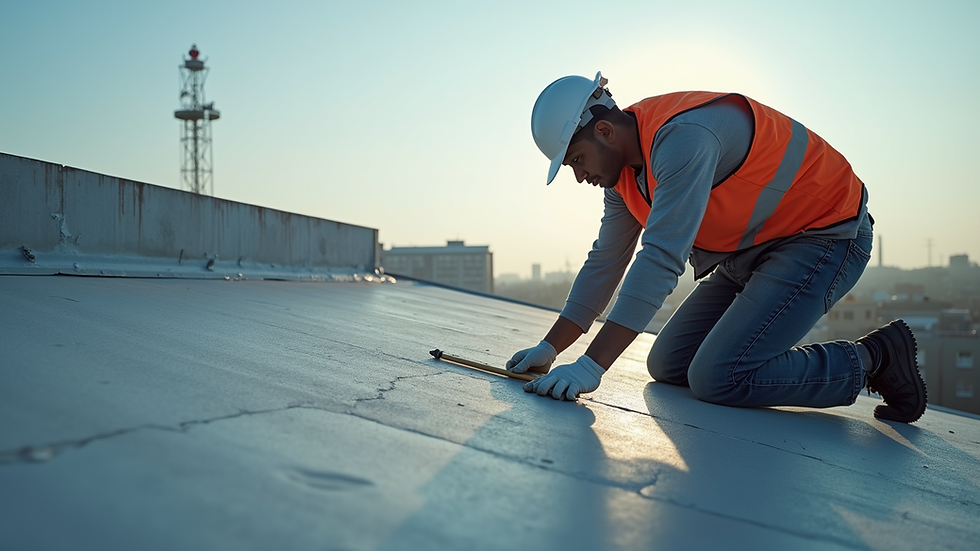
Roofers must be licensed, insured, experienced, trained, trusted, and they must never cut corners. Ignoring details or failing to comply with regulations puts everyone at risk.
Quality Roofing is an Imperative
Roofing as a Strategic Investment
Roof replacement is often seen as an immediate, unavoidable expense. However, a thorough analysis reveals that roofing is fundamentally a risk-management investment. It mitigates significant financial, legal, insurance, and long-term property value risks. The real challenge for homeowners and property managers is distinguishing between genuine cost-effectiveness and the false economy of a low bid. This challenge is compounded by aggressive sales tactics employed by roof salespeople, leaving many homeowners confused and stressed.
Many property owners wonder if hiring an unlicensed or uninsured roofing contractor transfers legal, financial, and safety risks onto them. That is the premise of this article. I have read and researched various articles, some based on research, while others were written by government and compliance agencies and tradesmen in the industry.
Hiring an unlicensed or uninsured roofer exposes you to severe risks in three areas: legal liability, warranty loss, and insurance claim denial (E&E General Contracting, n.d.; Shumaker Roofing, n.d.). To avoid these pitfalls, consumers rely on vetting and word of mouth. Professional vetting—verifying that a roofing contractor holds a current license, carries comprehensive insurance, and maintains manufacturer certification—is the primary method that property stakeholders use to transfer operational risk. However, many consumers do not know where to begin or which questions to ask.
Risk: Safety and Liability
Roofing is consistently ranked among the most dangerous trades in the United States. In 2023, the construction industry recorded 5,283 fatal work injuries (Occupational Safety and Health Administration, 2024). Falls, slips, and trips accounted for 37% of construction fatalities in 2021 (Texas Department of Insurance, n.d.) and 47.8% of fatal falls across all industries in 2023 (U.S. Bureau of Labor Statistics, 2024).
Among construction trades, roofers face the highest fatal injury rate—59 deaths per 100,000 full-time equivalent workers—outpacing ironworkers, electricians, and carpenters (Jackson Lewis, n.d.). In 2023 alone, 110 fall-related deaths occurred in the roofing industry, representing 26% of all fall fatalities (U.S. Bureau of Labor Statistics, 2024). This elevated risk makes professional training, licensing, and safety compliance non-negotiable. Compliance is vital and should not be taken lightly.
Compliance is Not an Option, It is a Requirement
How Risk Transfers to the Homeowner
Since the legal burden shifts directly to the homeowner, the injured worker—or the worker’s family—may pursue the homeowner for damages. In many cases, the homeowner becomes the de facto employer and is responsible for medical bills, lost wages, and potential lawsuits (Etehad Law, n.d.; Remodel Works, n.d.). Given the exceptionally high risks associated with roofing, the implications of inadequate contractor insurance become stark. When a roofer lacks proper coverage, the legal burden for the worker’s safety and all hazards shifts directly to homeowners. A homeowner saving a few thousand dollars on a low bid may unknowingly trade that savings for multimillion-dollar exposure if a worker is hurt on their property.
Liability Under State Law
If unlicensed contractors create hazards that injure neighbors or pedestrians, the homeowner can be held liable for third-party injuries (Remodel Works, n.d.). In many states, unlicensed contractors forfeit the right to collect payment for their work, highlighting their noncompliance and offering limited restitution to the homeowner (Etehad Law, n.d.).
Poor Installation Erodes Performance and Value
Safety is Essential
Mechanisms of Financial Failure
Unlicensed contractors typically underbid by cutting essential labor and training costs. These shortcuts lead to:
Improper flashing installation
Incorrect nail placement
Compromised wind resistance
Missed structural repairs
Lack of ventilation assessment
These mistakes significantly reduce the roof’s lifespan and increase the likelihood of leaks and structural damage (Roof Crafters, n.d.; GAB Construction, n.d.).
Warranty Voidance
Homeowners receive two warranties on a roof system: the manufacturer’s material warranty and the contractor’s workmanship warranty. Improper installation is the leading cause of denied manufacturer warranty claims (Ridgeline Roofing, n.d.). Only certified contractors can offer upgraded or extended warranties, and unlicensed contractors automatically disqualify the homeowner from those protections (Affordable Roofing Systems, 2022). A roof installed incorrectly may fail years or decades prematurely, forcing a full replacement at the homeowner’s expense.
Negative Return on Investment
Choosing the cheapest contractor guarantees a negative return. If a roof installed today must be replaced in 10 years instead of 25 years due to improper installation, the homeowner has effectively paid for two roofs while receiving the lifespan of one (Roof Crafters, n.d.). “This is not savings—it is financial loss.”
Insurance Protects You and Them
Insurance Claims in a High-Risk Weather Environment
Rising Storm Losses
Hail is the number one cause of roofing claims (CAPE Analytics, n.d.). Annual hail losses now total between $8–15 billion, a dramatic increase from earlier decades. State Farm alone paid more than $3.5 billion in hail claims in 2022 (Insurance Information Institute, n.d.). This surge in property damage has led insurers to tighten underwriting standards, raise deductibles, and limit coverage for older roofs (Bill Ragan Roofing, n.d.).
ACV, RCV, and Depreciation
Two valuation methods dominate roof claims:
Actual Cash Value (ACV): Replacement cost minus depreciation (Office of the Texas Insurance Commissioner, n.d.; Mutual Benefit Group, n.d.).
Replacement Cost Value (RCV): Full replacement cost, minus deductible, paid in two checks (Mutual Benefit Group, n.d.).
Many homeowners are surprised to discover that insurers often withhold depreciation until licensed contractors complete the work and submit documentation.
Code Upgrade Coverage
Building codes change frequently. Without Ordinance or Law Coverage (Code Upgrade coverage), homeowners must pay out-of-pocket for mandatory upgrades required by modern codes (Linta Roofing, n.d.; The Shingle Master, n.d.). These expenses often exceed $1,500. Proper documentation from a licensed contractor ensures full recovery of eligible costs.
Roofing as an Asset That Enhances Property Value
Measurable ROI
According to the 2024 Cost vs. Value Report, roof replacements provide one of the strongest returns among major home renovations (Remodeling, 2024):
Asphalt shingle replacement: 57% ROI
Metal roof replacement: 48% ROI
These returns compare favorably to midrange kitchen remodels, which average only 50% ROI.
Value Assurance
A new roof primarily protects and justifies property value. Appraisers and buyers immediately discount a property with an aging or damaged roof (Revive Real Estate, 2024). A new, warranted roof signals proper maintenance and reduces perceived risk, enabling higher resale pricing.
Conclusion
The evidence is clear: hiring an unlicensed or uninsured roofing contractor is not a cost-saving strategy. It is a direct transfer of legal, financial, and safety risk onto the homeowner. This decision undermines safety compliance, voids warranties, jeopardizes insurance claims, and erodes long-term property value.
A licensed, insured, and manufacturer-certified contractor is the only legitimate mechanism for protecting the homeowner from these financial and operational hazards. With strong ROI, legal protection, and long-term performance, professional roofing is a strategic investment—not a short-term expense.
Learn more at www.cedarpeakroofing.com/home.
Use only reputable contractors that can document their ability to work through documentation and proof.
Feel free to leave a comment and share your experience!


Comments